ShiraDestAntonia (e)k Cixin Liu(r)en Le problème à trois corps liburuaren kritika egin du
Un livre exelent, sur tout apres Boule de Foudre
5 izar
C'est la 2me fois que je le lis, et je l'ai appreciee encore plus, cette fois ci.
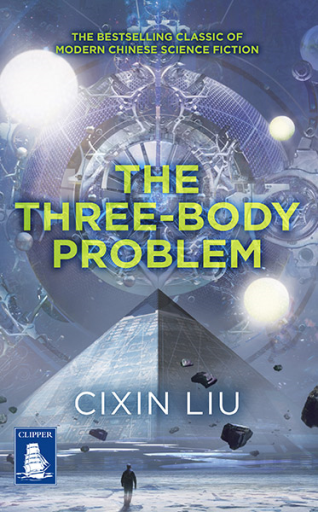
large print, 530 orrialde
English hizkuntza
2016ko aza. 1a(e)an W F Howes Ltd(e)n argitaratua.
Set against the backdrop of China’s Cultural Revolution, a secret military project sends signals into space to establish contact with aliens. An alien civilisation on the brink of destruction captures the signal and plans to invade Earth. Meanwhile, on Earth, different camps start forming, planning to either welcome the superior beings and help them, or fight against the invasion.
C'est la 2me fois que je le lis, et je l'ai appreciee encore plus, cette fois ci.
Terminado el primer libro de la trilogía. Sin aún conocer como serán el resto de libros de la saga, considero algo refrescante a lo que he leído en el género. Es un libro cuyo origen cultural es diferente al típico contexto occidental, ya que el libro fue escrito originalmente en Chino, aunque la traducción es muy buena, se nota algo en como se estructuran las ideas y las frases, entendería que a alguien le pueda resultar algo molesto pero para mi le da un valor añadido.
Esta historia empieza en la revolución cultural china, algo ya de por si, bastante interesante como occidentales, ya que la historia China no es algo a lo que aquí tengamos muchas nociones. Pero rápidamente avanza a un futuro próximo. Los demonios de la revolución cultural, como condición de partida en una acumulación de causas afectos (haciendo la analogía al problema físico al que da …
Terminado el primer libro de la trilogía. Sin aún conocer como serán el resto de libros de la saga, considero algo refrescante a lo que he leído en el género. Es un libro cuyo origen cultural es diferente al típico contexto occidental, ya que el libro fue escrito originalmente en Chino, aunque la traducción es muy buena, se nota algo en como se estructuran las ideas y las frases, entendería que a alguien le pueda resultar algo molesto pero para mi le da un valor añadido.
Esta historia empieza en la revolución cultural china, algo ya de por si, bastante interesante como occidentales, ya que la historia China no es algo a lo que aquí tengamos muchas nociones. Pero rápidamente avanza a un futuro próximo. Los demonios de la revolución cultural, como condición de partida en una acumulación de causas afectos (haciendo la analogía al problema físico al que da el título a este libro) lleva a la humanidad a un futuro caótico donde se enfrentará a consecuencias impredecibles.
El libro aborda algunos de los problema clásicos de la ciencia ficción mientras desarrolla una compleja trama de investigación y misterio, sobre aparentes hechos sobrenaturales y extrañeces que están empujando a los científicos de primer nivel a la locura y la desesperación a lo largo y ancho del planeta tierra.
No es un libro perfecto, no se termina de desarrollar algunos conceptos que pone encima de la mesa y otros se simplifican, pero es un deleite poder leer referencias de física, matemáticas e incluso de computación y programación.
Con ganas de leer sus próximas partes.
I've read all three books before writing this review; and I can say: the first is the strongest and most exciting of the series. Hard science concepts are mixed with interesting characters and novel problems that may be feel a sense of scale and wonder as I read.
Another mediocre read, I’m not having much luck at the moment! This started off so well, I was absolutely hooked by the clever, sophisticated scientific concepts and Liu’s easy writing style. The sections set in 1960s China were fascinating, it kind of felt like a sweeping historical sci-fi. I was also really invested in the main characters early on, and I especially loved Da Shi, the noir-ish detective with a bit of an attitude.
But then somewhere around the halfway mark things got really bogged down with the science, in fact the science became the main character. The scientific concepts became very hard for a casual reader to grasp and Liu would spend pages, sometimes entire chapters, dissecting and analysing these complex ideas. Quite frankly, I got bored and felt quite alienated as a reader. All of the momentum went out of the storytelling and character development, which just felt …
Another mediocre read, I’m not having much luck at the moment! This started off so well, I was absolutely hooked by the clever, sophisticated scientific concepts and Liu’s easy writing style. The sections set in 1960s China were fascinating, it kind of felt like a sweeping historical sci-fi. I was also really invested in the main characters early on, and I especially loved Da Shi, the noir-ish detective with a bit of an attitude.
But then somewhere around the halfway mark things got really bogged down with the science, in fact the science became the main character. The scientific concepts became very hard for a casual reader to grasp and Liu would spend pages, sometimes entire chapters, dissecting and analysing these complex ideas. Quite frankly, I got bored and felt quite alienated as a reader. All of the momentum went out of the storytelling and character development, which just felt criminal as they were such interesting characters. It was such a disappointing turn of events as I was loving it up until this point, and was so excited to read the other books in the trilogy.
« Le problème à trois corps » est trilogie de SF chinoise, voire de hard-SF. En 2021, le roman avait déjà une belle renommée car il avait obtenu le prix Hugo (en 2015) et que Barack Obama en avait fait l‘éloge public. Comme j‘écris ma chronique avec 3 ans de retard, je peux ajouter qu‘elle a encore gagnée en visibilité cette année, puisqu‘elle a été adaptée en série par Netflix !
40 ans plus …
« Le problème à trois corps » est trilogie de SF chinoise, voire de hard-SF. En 2021, le roman avait déjà une belle renommée car il avait obtenu le prix Hugo (en 2015) et que Barack Obama en avait fait l‘éloge public. Comme j‘écris ma chronique avec 3 ans de retard, je peux ajouter qu‘elle a encore gagnée en visibilité cette année, puisqu‘elle a été adaptée en série par Netflix !
40 ans plus tard, alors qu’une étrange vague de suicides frappe la communauté scientifique internationale. Wang Miao, un scientifique expert en nano-technologies, se voit confronté à d’étranges phénomènes qu’il va rapidement relier à un nouveau, et mystérieux, jeu de réalité virtuelle.
J‘ai trouvé ma lecture passionnante, et palpitante, mais j‘ai quand même quelques réserves. Le livre est complexe, ce qui est assez naturel pour un roman de hard-science, mais je l’ai aussi parfois trouvé confus. Si les aspects scientifiques sont (vraiment) bien traités, les personnages, eux, ne sont pas assez développés. À l’exception notable de Ye Wentje, et peut-être de Shi Qiang, les personnages sont à peine ébauchés et cela m‘a gêné pour apprécier réellement ma lecture.
Je suis néanmoins content de l’avoir lu… mais je n‘était manifestement pas pressé ni d‘écrire à son sujet, ni de lire la suite 😉
ciencia ficcion, puray dura, profunda investigacion fisica, matematica, social, geopolitica, para crear a partir de un problema de modelo matematico, ( los tres cuerpos) una novela innovadora, un salto cuantico en la ciencia ficción
Edukiari buruzko abisua And I loved violin playing Albert
It was an interesting read. Somewhat hard to get into the story, but then it was making me turn pages and I could barely put it down. I loved some of the sci-fi ideas presented there.
A bunch of interesting ideas, but miles away from a great book.
I read this book a few years ago now, and found it very thought provoking, It certainly gave me pause for thought about the world and universe we live in.
I would hightly recommend this book.
I read the bok a few years ago now, and it was very thought provoking, first in a trilogy and certainly gave me pause for thought about the world and universe we live in.
I would highly recommend this book.
Interesting premise but could get a bit wordy at times and once i read all three I couldn’t help but think back to the implied/embedded nationalism and misogyny. Or how being a historian of China ruins everything 😅
I liked the plot and the unusual idea for the story, but the characters are somehow not so well detailed and it was hard to immerse myself into the book. Nevertheless, I'm going to read the second one in this series.
This was a little too weird for me and I can’t say I really bought the premise of the story fully…
Edukiari buruzko abisua This book is intensely political.
Everyone loves this, but I can't understand why nobody seems to be put off, or at least puzzled, but the way that every human individual or organization in the book is just relentlessly awful, ranging from suicidal to genocidal, and everything in-between, without respite.
Most of them, given any chance at all, are trying hard to selfishly save their own skins, with not a moment's regard for the fact that their plans will immediately doom the rest of the human race. Those not intent on self preservation at any cost are instead committed to bitter nihilism, such as the ultimate eco-terrorists, who feel that to save the Earth's biosphere they must collaborate with alien forces to bring about humanity's defeat, and likely annihilation.
These characters and groups are not depicted as outliers. They represent the human race in its entirety. The only thing that holds back this tide of destructive behavior is the government, who keeps everyone in line.
I can't tell how much of this bizarrely one-sided depiction of humanity is a deliberate choice by the author, versus simply being an unplanned exposure of their worldview, shaped as it is by their native Chinese immersion in authoritarianism. Does that form a subconscious backdrop to everything they wrote here, or are they consciously making a deliberate point that strong government is absolutely necessary?
The author Liu Cixin has since gone on record in support of the Chinese government's internment of Muslim Uighurs in Xinjiang. There, people have been rounded up, because of their ethnicity, into over 400 internment camps. The camps administer cultural and religious re-education, forced labor, involuntary sterilization and abortion. This is something Liu Cixin is openly in favor of.
It makes my skin crawl to read that, and then carry on blithely with this story book of theirs, which seems to be an unapologetic justification for an authoritarian government's impositions on its populate. I did finish it, but have no desire to read the sequels - and not just because I don't agree with the politics. I genuinely found the behavior of all the characters to be intrusively bewildering, demented and incessantly frustrating.
Spannend aufgebaut mit verschiedenen Handlungssträngen, die sich irgendwann zusammenfügen. Technische / physikalische Grundprinzipien auch für mich als Laien verständlich dargestellt. Und die Frage nach dem "First Contact" mit all ihren Implikationen wurde toll beackert. Zusätzlich erfährt von noch etwas über die jüngere chinesische Geschichte.